For SpaceX employees and alumni

The IPO happened.
Now build your What's Next.

Paper wealth and real wealth are not the same thing. The decisions you make between now and December 8 will matter more than the number on your brokerage statement.

Understand what's ahead Get our guides

The Moment We're In

4,400+
Current and former employees now holding stock worth $1M or more
~400
Employees whose holdings exceed $100M at the $135 IPO price
Dec 8
The 180-day full lockup expiration. Staggered unlocks begin in late July.

The IPO was the milestone. What comes next determines what it was worth.

SpaceX built its compensation philosophy around ownership over cash. For employees who stayed the course, that bet paid off. But the moment shares start moving, a new set of decisions arrives, and they are more complex than the years of waiting that came before.

The staggered lockup structure gives employees several windows to sell before December 8, starting with up to 20% of eligible shares after Q2 earnings in late July. Then 7% tranches roughly every two weeks through the fall. Then the remainder.

That sounds orderly. It is not simple. The sequence in which you sell across different share types, ISOs, NSOs, and RSUs, and the timing of each decision against your overall tax picture can mean millions of dollars in different outcomes. Not from complexity. From sequencing.

June 12, 2026
IPO: $135/share

Shares begin trading on NASDAQ (SPCX). Lockup period begins. Most employee shares cannot be sold yet.

Late July 2026
First unlock: up to 20%

Triggered after Q2 earnings. A performance clause could push this to 30% if SPCX trades 30%+ above IPO price for 5 of 10 consecutive days.

Aug – Oct 2026
Staggered tranches: 7% each

Five separate windows at 70, 90, 105, 120, and 135 days post-IPO. Each is a decision point.

After Q3 earnings
Up to 28% more

The largest single pre-expiration release. Timing depends on when SpaceX reports Q3 results.

December 8, 2026
Full 180-day expiration

All remaining locked shares become eligible. The largest single-day potential release in the schedule.

One former SpaceX employee holds a stake that represents 93% of her household's investable net worth. Reported ahead of the June 12 IPO. Not unusual among long-tenured employees.

Concentration risk is the quiet version of the problem. The IPO creates real wealth, but if most of it sits in a single stock, a 30% correction in SPCX does not just affect a portfolio. It delays retirement, constrains what you can give your children, and forces decisions under pressure. The planning question is not only when to sell. It is how to build something durable from this moment.

What goes wrong

Six ways this gets complicated. And how to get ahead of them.

Parcion has guided more than 60 families through major wealth events. The same mistakes appear with reliable frequency. None of them are inevitable.

01
Selling in the wrong order

ISO, NSO, and RSU shares carry different tax treatments. Selling the wrong type first, or failing to account for AMT exposure, can cost more in taxes than a year's salary. The order matters before the quantity.

02
Missing the OZ window

Capital gains rolled into a Qualified Opportunity Fund within 180 days of a sale qualify for federal tax deferral, and potential elimination after a 10-year hold. Congress made Opportunity Zones permanent in 2025. That window starts the day you sell.

03
Concentration that lingers

Every week you hold a position that represents the majority of your net worth is a week you are making an active bet on one company. Even strong companies correct. SpaceX is not immune to post-IPO volatility.

04
Estate planning that didn't update

If your beneficiary designations, trust structures, or gifting strategies haven't been reviewed since your net worth changed by eight figures, they are almost certainly wrong. A wealth event is a planning event.

05
Advisors who don't talk to each other

An investment decision can close an estate planning window. A tax strategy can determine your OZ eligibility. When these disciplines operate in silos, the seams between them are where money gets lost.

06
Treating paper wealth like income

A $15M position is not a $15M salary. Commitments made before liquidity arrives, real estate, private investments, lifestyle spending, can strain wealth that looks substantial but is not yet diversified.

What a full team looks like

A liquidity event requires more than a single advisor.

The complexity of a major wealth event spans disciplines that need to talk to each other in real time. Investment management, tax strategy, estate planning, and philanthropic structure are not sequential. They are simultaneous. The timing of one decision affects the others. Coordination is where the real value is.

Investment Management
Building something durable from the proceeds

Diversifying away from a concentrated position while preserving long-term growth. Designing a plan that reflects your time horizon, your risk tolerance, and what you actually want this wealth to do. Not a template. A strategy built for your family.

Tax-Aware Planning
Keeping more of what you built

Sequencing share sales to minimize tax exposure. Evaluating ISO, NSO, and RSU treatment alongside AMT exposure, Opportunity Zone timing, and Washington state capital gains. These decisions compound. The earlier they are made, the more room there is to work.

Estate Planning Coordination
Taking care of the people you love

Reviewing trust structures, beneficiary designations, and gifting strategies in light of a dramatically changed balance sheet. Working alongside your estate attorney to ensure the plan matches your intentions and the new numbers.

Philanthropic Strategy
Making an impact on the causes you care about

Donor-advised funds, charitable remainder trusts, and direct giving can reduce tax exposure while directing wealth toward the causes that matter to your family. Philanthropic planning belongs in the same conversation as everything else, not after the fact.

Go deeper

Two guides for two different questions.

One is for the engineer who wants to understand every mechanism. One is for the person thinking about what this means for their family.

SpaceX Employee Playbook Technical Guide
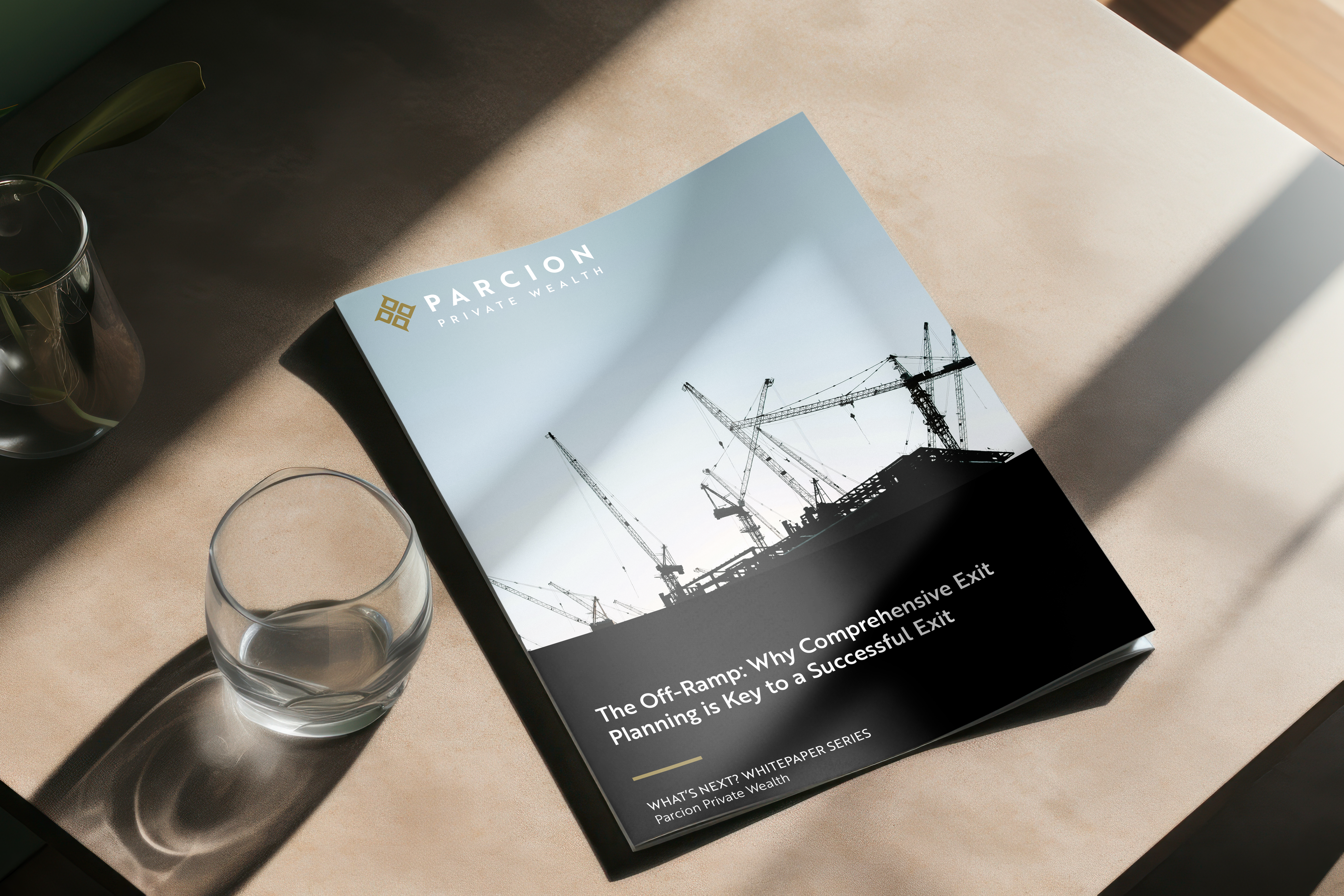
The SpaceX Employee Playbook

ISO, NSO, and RSU sequencing. The staggered lockup structure. AMT exposure. Opportunity Zone mechanics. Washington state capital gains. In plain terms, with specific numbers. For the employee who wants to understand every lever before touching any of them.

Request the guide
After the IPO: What Comes Next Planning Guide
After the IPO: What Comes Next

What first-generation wealth actually looks like when it is built right. How families use a liquidity event to clarify their values, take care of the people they love, and build something that lasts beyond a single stock price. The financial decisions matter. So does knowing what comes next.

Request the guide

Ready to think through what comes next?

Parcion works with a select group of families navigating major wealth events. If you want to understand how we might fit your situation, we are glad to start with a conversation.

Parcion Private Wealth This page is for informational purposes only and does not constitute investment, tax, or legal advice. All figures sourced from public filings and published reports. Parcion Private Wealth is an SEC-registered investment adviser. Consult qualified tax and legal counsel before making decisions regarding your SpaceX equity. © 2026 Parcion Private Wealth.
Parcion Private Wealth

Schedule a conversation

Tell us a bit about your situation. We'll be in touch within one business day.

Parcion Private Wealth is an SEC-registered investment adviser. This form does not create an advisory relationship.

0
Skip to Content
Parcion Private Wealth
BOX SPREADS
Parcion Private Wealth
BOX SPREADS
BOX SPREADS